What is the AML KYC verification process?
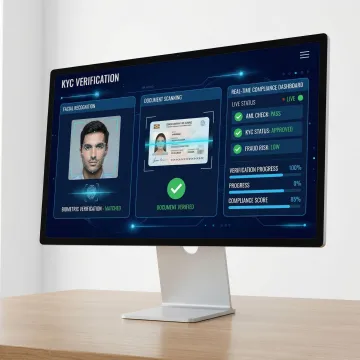
The AML KYC verification process combines Anti-Money Laundering (AML) protocols with Know Your Customer (KYC) procedures to verify customer identities and assess financial crime risk. It typically includes customer identification through government-issued documents, beneficial ownership verification for businesses, risk-based due diligence assessments, ongoing transaction monitoring for suspicious activity, and periodic customer information updates. This integrated approach helps financial institutions comply with BSA regulations while detecting potential money laundering, terrorist financing, and fraud.
What is AML in identity verification?
AML (Anti-Money Laundering) in identity verification refers to the regulatory framework and processes designed to prevent criminals from disguising illegally obtained funds as legitimate income. Within identity verification, AML requirements mandate that financial institutions verify customer identities, assess risk levels, monitor transactions for suspicious patterns, and report certain activities to regulatory authorities like FinCEN. This includes screening customers against OFAC sanctions lists, politically exposed persons (PEP) databases, and adverse media sources to ensure they aren't involved in financial crimes.
How long does it take to implement a KYC program?
Implementation timelines vary based on organizational complexity, existing infrastructure, and regulatory requirements. For a basic KYC program redesign, expect 8-12 weeks for policy development, workflow design, and initial implementation. Comprehensive programs involving new technology integration, enhanced due diligence procedures, and transaction monitoring systems typically require 3-6 months. We work with your timeline and resources to deliver phased implementations that meet regulatory deadlines while minimizing operational disruption, ensuring your program is audit-ready from day one.
What industries require KYC and AML compliance?
KYC and AML compliance requirements apply primarily to financial institutions including banks, credit unions, broker-dealers, money services businesses, fintechs, payment processors, cryptocurrency exchanges, and lending platforms. Insurance companies, real estate professionals, precious metals dealers, and casinos also face specific verification requirements under FinCEN regulations. The scope of obligations varies by business model, transaction volume, and risk profile, with some organizations requiring comprehensive BSA programs while others need targeted compliance measures tailored to their specific activities.
How much do identity verification compliance services cost?
Costs depend on your organization's size, complexity, and specific needs. Fractional CCO/BSA Officer services provide senior-level expertise at a fraction of full-time hiring costs, typically structured as monthly retainers. Project-based work like KYC redesigns or AML program development is scoped individually based on current state assessment and desired outcomes. Transaction monitoring optimization and ongoing program support follow flexible engagement models. We offer complimentary initial consultations to assess your situation and provide transparent pricing aligned with measurable compliance improvements and regulatory exam readiness.
What happens during a regulatory exam?
Regulatory exams assess your compliance program's effectiveness through document reviews, staff interviews, transaction testing, and risk assessment validation. Examiners evaluate whether your KYC procedures adequately identify customers, your AML program detects suspicious activity, your transaction monitoring generates quality alerts, and your governance structure provides appropriate oversight. They review policies, procedures, training records, audit findings, and suspicious activity reports (SARs). Strong programs demonstrate risk-based approaches, timely issue remediation, and board-level engagement. We prepare organizations for exams through gap assessments, documentation review, and mock examinations.
Can you help with sponsor bank relationships?
Yes, our Sponsor Bank Representation services help fintechs and payments companies establish and maintain compliant sponsor bank partnerships. We provide bank-ready compliance programs that meet sponsor bank due diligence requirements, facilitate regulatory alignment between your organization and banking partners, manage ongoing partner communication and reporting obligations, and ensure your compliance framework scales with partnership growth. This bridge between innovative business models and traditional banking relationships helps secure and maintain critical sponsor bank partnerships while satisfying heightened regulatory scrutiny.
How do you optimize transaction monitoring systems?
We improve transaction monitoring through comprehensive rule tuning based on actual transaction patterns and risk profiles, alert quality enhancement to reduce false positives while maintaining detection effectiveness, workflow optimization to streamline investigation processes and documentation, scenario development tailored to your specific business model and customer base, and performance metrics tracking to demonstrate continuous improvement. The result is better alert quality, reduced operational friction, improved investigator efficiency, and stronger regulatory exam readiness. Our data-driven approach ensures monitoring systems evolve with your business growth and emerging threats.