What is an OIG exclusion screening?
OIG exclusion screening is the process of checking individuals and entities against the Office of Inspector General's List of Excluded Individuals and Entities (LEIE). This federal database identifies people and organizations barred from participating in federal healthcare programs like Medicare and Medicaid due to fraud, abuse, or other violations. Organizations that employ or contract with excluded parties risk severe penalties, including loss of federal funding and substantial fines, making regular screening essential for healthcare-adjacent businesses.
What is OFAC compliance screening?
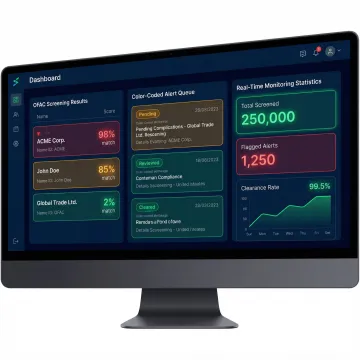
OFAC compliance screening verifies that your customers, vendors, and business partners do not appear on the Office of Foreign Assets Control's sanctions lists, including the Specially Designated Nationals (SDN) list. OFAC administers economic sanctions programs that prohibit U.S. persons from conducting business with certain individuals, entities, and countries. Effective screening prevents prohibited transactions, protects against substantial civil and criminal penalties, and ensures your organization maintains compliance with U.S. sanctions regulations across all payment flows and business relationships.
How often should exclusion screening be performed?
Initial screening must occur before onboarding any employee, vendor, or business partner, with continuous monitoring throughout the relationship lifecycle. Federal lists update frequently—sometimes daily—making one-time screening insufficient. Best practice involves automated continuous monitoring that alerts you immediately when a screened party's status changes. At minimum, quarterly re-screening is recommended for lower-risk relationships, while higher-risk categories benefit from real-time monitoring to ensure compliance posture remains current and audit-ready.
What happens if we identify a match during screening?
When screening identifies a potential match, immediate escalation and investigation are required. Our process includes detailed match analysis comparing identifying information, assessment of relationship risk and regulatory implications, documentation of investigation findings, and determination of appropriate remediation steps. Depending on the match type, remediation may include relationship termination, transaction blocking, regulatory reporting, or implementation of enhanced due diligence. We provide clear escalation protocols and documentation frameworks that demonstrate thorough compliance response to regulators and auditors.
Can you integrate screening with our existing systems?
Yes, our screening solutions are designed to integrate seamlessly with existing compliance infrastructure, customer onboarding platforms, and vendor management systems. We work with your technology stack to implement screening workflows that minimize operational friction while maximizing compliance effectiveness. Integration approaches range from API connections for real-time screening to batch processing for periodic reviews, depending on your risk profile and operational requirements. Our goal is embedding screening into existing workflows rather than creating parallel processes that slow business operations.
How do you handle false positives in screening results?
Our screening programs are designed with risk-based decisioning frameworks that balance catch rates with operational efficiency. We implement fuzzy matching algorithms calibrated to your risk tolerance, establish clear escalation thresholds based on match quality, and provide investigation protocols that enable rapid resolution of false positives. Our approach includes pre-screening data hygiene to improve match accuracy, standardized documentation templates for investigation findings, and continuous tuning based on false positive rates. This reduces alert fatigue while ensuring genuine risks receive appropriate attention and regulatory scrutiny.
What documentation is required for regulatory exams?
Regulators expect comprehensive documentation demonstrating screening program effectiveness, including written policies and procedures, evidence of initial and ongoing screening, investigation records for all matches, escalation and remediation actions taken, staff training documentation, and quality assurance reviews. We help you establish audit-ready documentation frameworks that capture required evidence automatically, maintain complete audit trails, and demonstrate consistent application of screening protocols. Our approach ensures you can quickly produce requested materials during examinations with clear narratives showing program effectiveness.
How much do exclusion screening services cost?
Screening service costs vary based on screening volume, required list coverage, monitoring frequency, integration complexity, and documentation needs. Factors influencing pricing include number of initial screenings, continuous monitoring scope, integration with existing systems, custom reporting requirements, and audit support services. We provide transparent, scalable pricing models aligned with your risk profile and operational requirements. During consultation, we assess your specific needs and provide detailed cost estimates that balance comprehensive coverage with budget considerations while ensuring regulatory compliance.